|
A7N
|
|
|
A7N
|
|
|
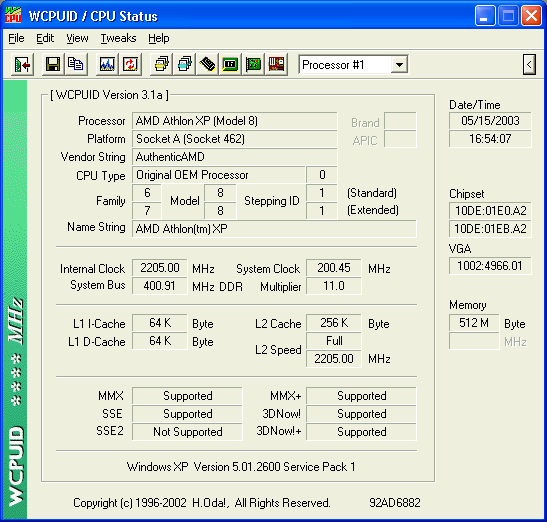
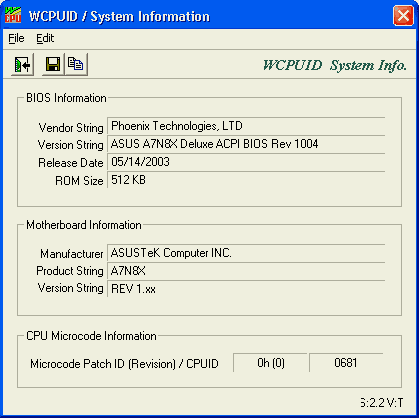
Notes Overclocking This system ran fine at 2230MHz (202.7 x 11) with no stability
issues for approximately two months using BIOS 1003 and Vcore setting of 1.725. The next lower FSB option with
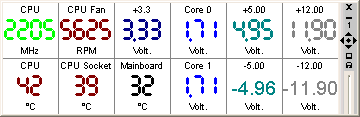
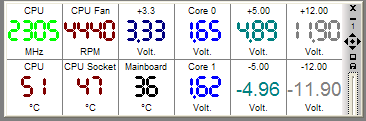
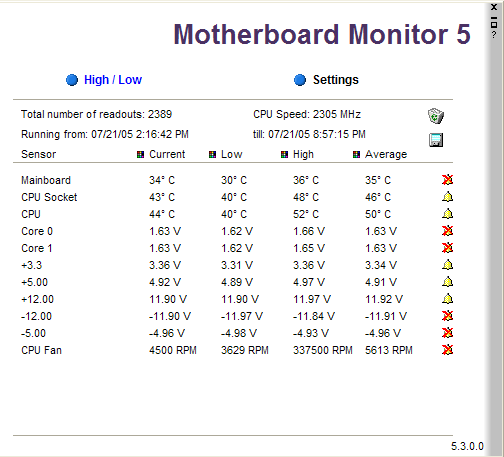
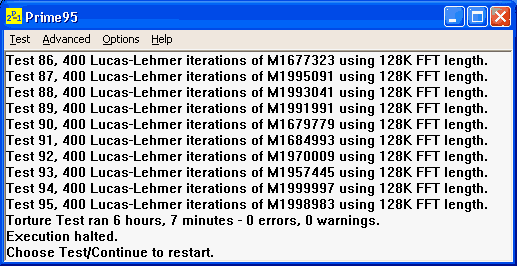
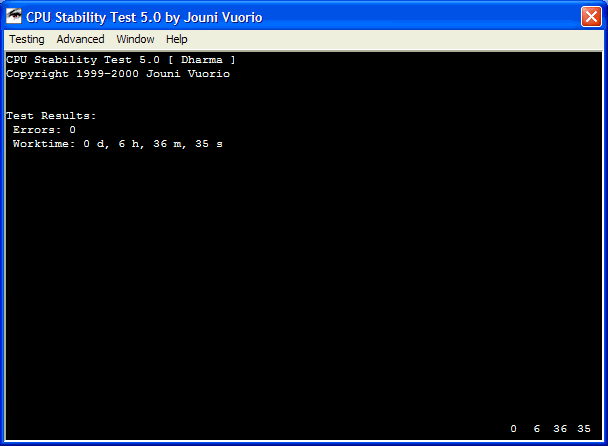
this BIOS is 199MHz which required 1.700 Vcore for stability. (See processor and motherboard upgrades below for latest overclocking configuration.) Video Card In December 2003 the original ATI Radeon 9000 Pro video card was replaced with a Sapphire ATI Radeon 9600XT card, which was successfully overclocked to 576MHz/335MHz. The original video card was a substantial bottleneck to overall system performance, as can be seen by the benchmark improvement. In January 2006 video card was upgraded again to a Sapphire Radeon X800GTO. This provided a major boost to 3D graphics processing capability. At this time the power supply was also upgraded to an Enermax 460 watt unit and a 19" LCD monitor was put into service. Windows XP Service Pack 2 In August 2004 Service Pack 2 was installed for Windows XP. No benchmarking was performed at the time of this change. The earlier benchmarks were run with Service Pack 1. Subsequent benchmarks showed a slight deterioration in math processing and a slight improvement in graphics processing which may be related to SP 2. Hard Drive In October 2004 the orginal IBM Deskstar IDE disk drive was replaced with an Hitachi Deskstar SATA drive. At this time the 1007 and 1009 BIOS were tested. Neither proved capable of achieving the same overclocking performance as the 1004 BIOS. Testing at this time also revealed that it was necessary to increase the Vcore setting from 1.675 to 1.700 to maintain stability at the same clock rates. Apparently the enabling of the SATA controller chip had a slightly unfavorable impact on stability. The SATA drive improved sequential disk R/W performance significantly. Processor Upgrade - Athlon Barton Mobile XP In July 2005 the orginal AMD Athlon Thoroughbred.XP 2400+ was replaced with an Athlon Barton XP-M 2500+. The Athlon Barton has twice the L2 cache size of the original Thoroughbred for increased performance. This "mobile" variant is nominally intended for use in a laptop computer at 1.45Vcore. The ability of this processor to run at lower voltages translates into a corresponding ability to overclock significantly with higher voltage. So it is relatively easy to achieve XP 3200+ performance from this humbly rated chip. Currently the chip is running at 200.5 x 11.5 = 2305MHz (~"3350+") at only 1.60V nominal (1.63V indicated). The lower voltage results in lower power consumption and heat generation relative to the original overclocked XP 2400+, while still increasing processing performance. Coupling this lower heat load with an added Aspire Fan Master fan controller allows the cooling fan speed to be reduced 20% for significantly quieter operation. There is additional untapped performance potential if additional Vcore is applied. Testing so far indicates that 1.725V nominal is required to operate this CPU with absolute stability at 200.5 x 12 = 2406MHz. It may be possible to run this CPU at 200.5 x 12.5 = 2505MHz on this motherboard if enough voltage is applied. Motherboard Upgrade - A7N8X Deluxe 2.0 In Feb 2006 the orginal A7N8X Deluxe 1.04 was replaced with a used A7N8X Deluxe 2.0 with 1 GB of dual channel DDR RAM. The Rev. 1.04 board was still working fine with the orginal memory but the reason for upgrading the motherboard was to better accomodate the increased RAM. While the 2 x 512MB Crucial Ballistix RAM would work at 200MHz on the 1.04 board at CAS 2.5, ACPI suspend to RAM ("Standby") would not function with this configuration. Upgrading to the Rev. 2.0 allowed the RAM to function at it's rated CAS 2.0 setting at 200+MHz. Using the 1008 BIOS modified by "trats" and "Red Dwarf" with optimized CPU timings and memory "command rate 1" (CPC On), also allowed for an FSB overclock of 11.5 x 204.45 @ 1.675 Vcore. However Windows XP Standby would not function properly with this overclock, so the system is currently being operated at 200.45MHz. Notes on Asus Q-Fan. While experimenting with the Rev. 2.0 board, Asus Q-Fan was also tested to determine how effective this Asus / Via nForce2 feature would automatically regulate CPU fan speed as CPU temperatures increased with processor load. Q-Fan worked well enough in this regard, but it failed to reduce fan speed after recovering from Standby, forcing the CPU fan to run at 100% regardless of temperature. I had read of this problem with Rev. 1.04 boards and had expected it would have been resolved with the Rev. 2 and latest BIOSes. Guess not. Hopefully the latest generation of Via and competitor chip sets will work better in conjunction with the enhanced Windows standby features which are expected to be incorporated in the upcoming Windows Vista operating system. |
|
|
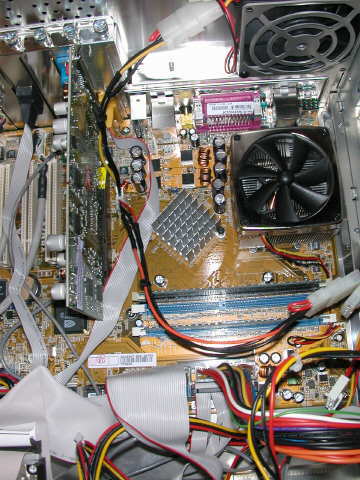
Motherboard showing Vantec
Aeroflow cooler, |
|
|
CPUZ Report for XP-M 2500+ @ 2305MHz
Mother
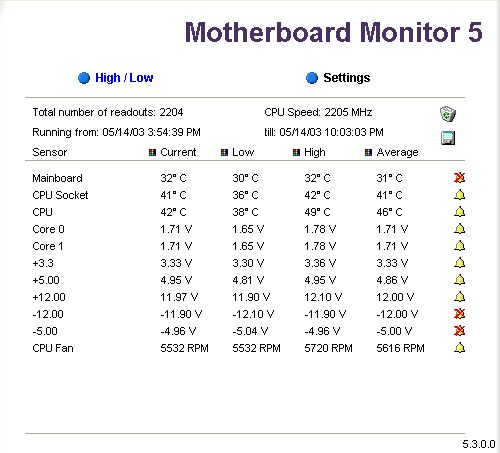
Board Monitor Dashboard
|
||
|
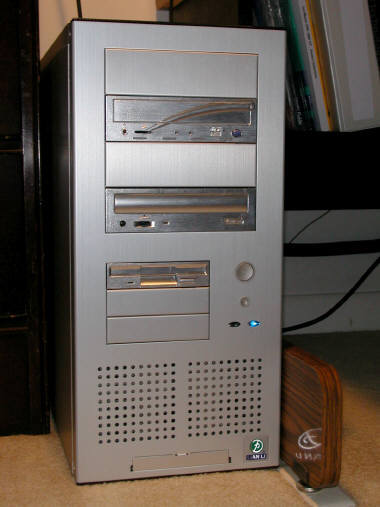
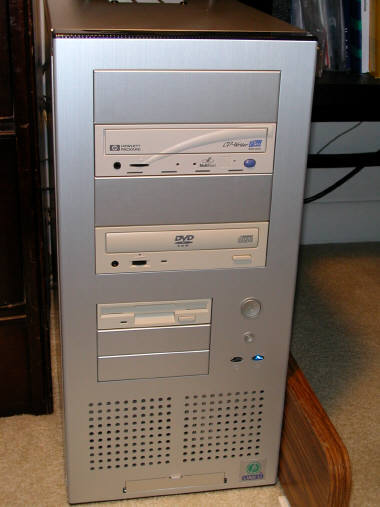
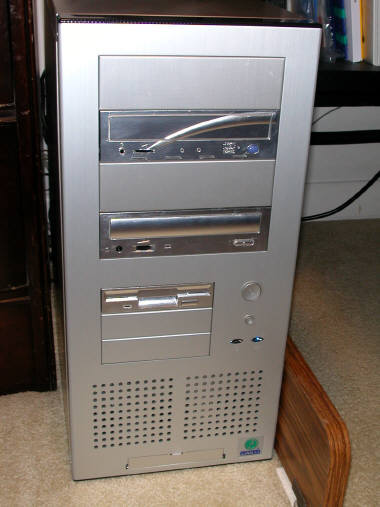
Lian Li case with drive faces unfinished |
Drives faces finished with "Bare-Metal" Matte Aluminum |
|
|
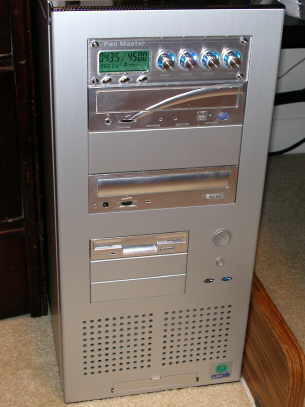
Case with Aspire Fan Master. |
||
Last Updated: 03 Mar 2006
3502